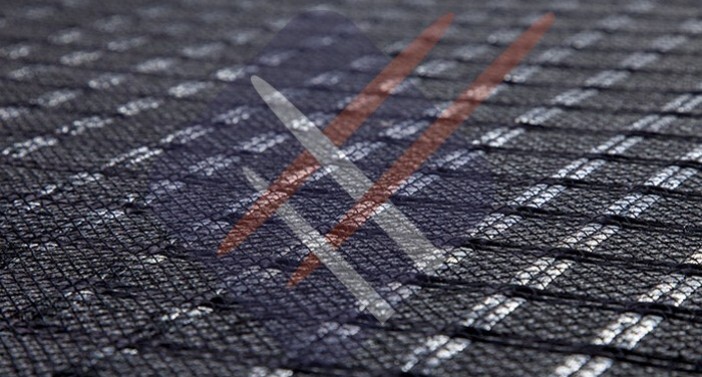
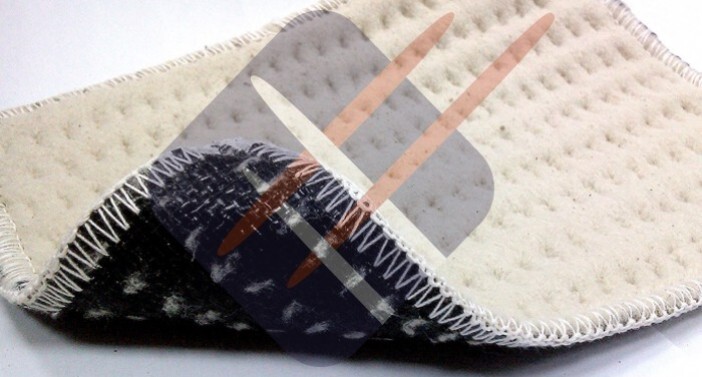
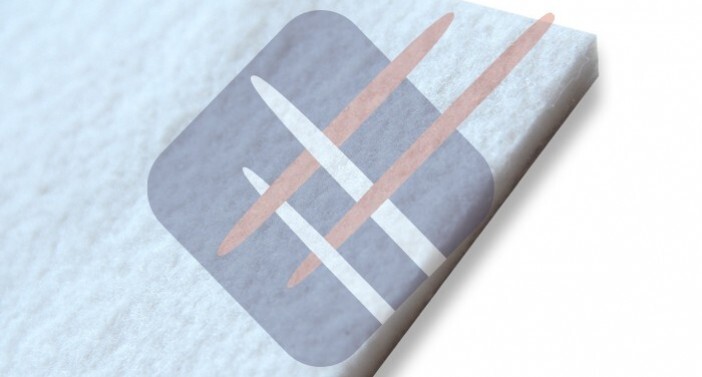
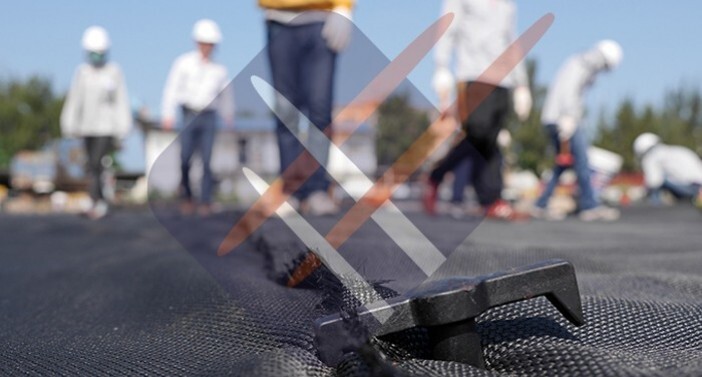
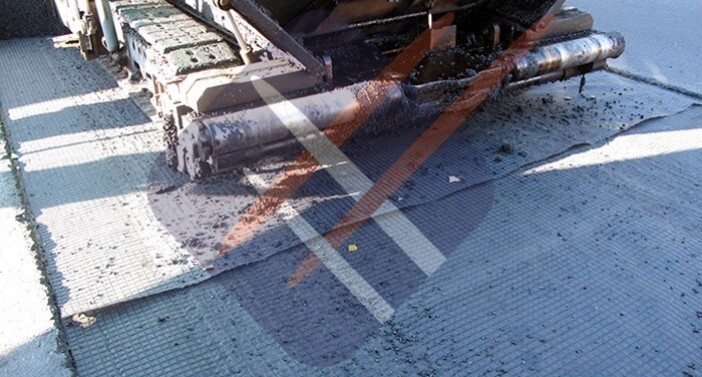
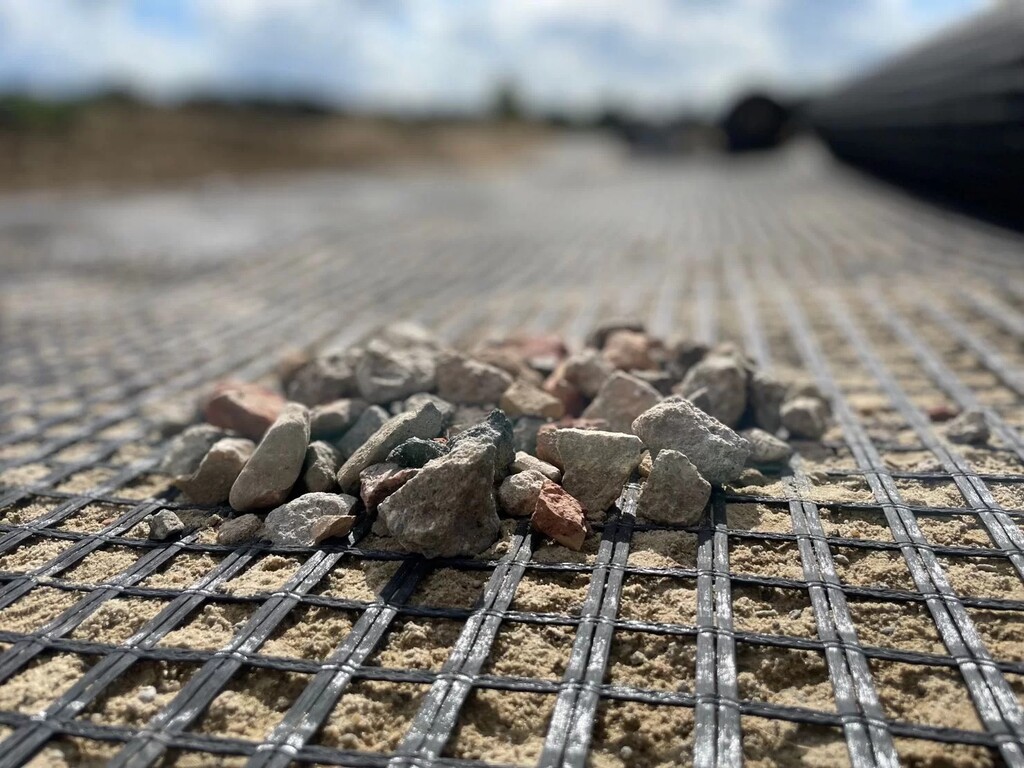
DESCRIPTION: Constructed by a high-tenacity fiberglass grid, a lightweight non woven geotextile and bitumen coating which can provide a good bonding property with asphalt layers COMPOSITION:
1) FIBERGLASS GRID - high strength, high modulus and high temperature resistance for high reinforcement performance
2) NON WOVEN GEOTEXTILE - increase the liquid asphalt retention capacity
3) BITUMEN
FEATURES: Very low elongation High tensile modulus High temperature endurance Strong bonding to asphalt layers BENEFIT: Easy and rapid installation APPLICATION: Roadway and railway pavement improvement
GEOCOMPOSITE CLAYLINER
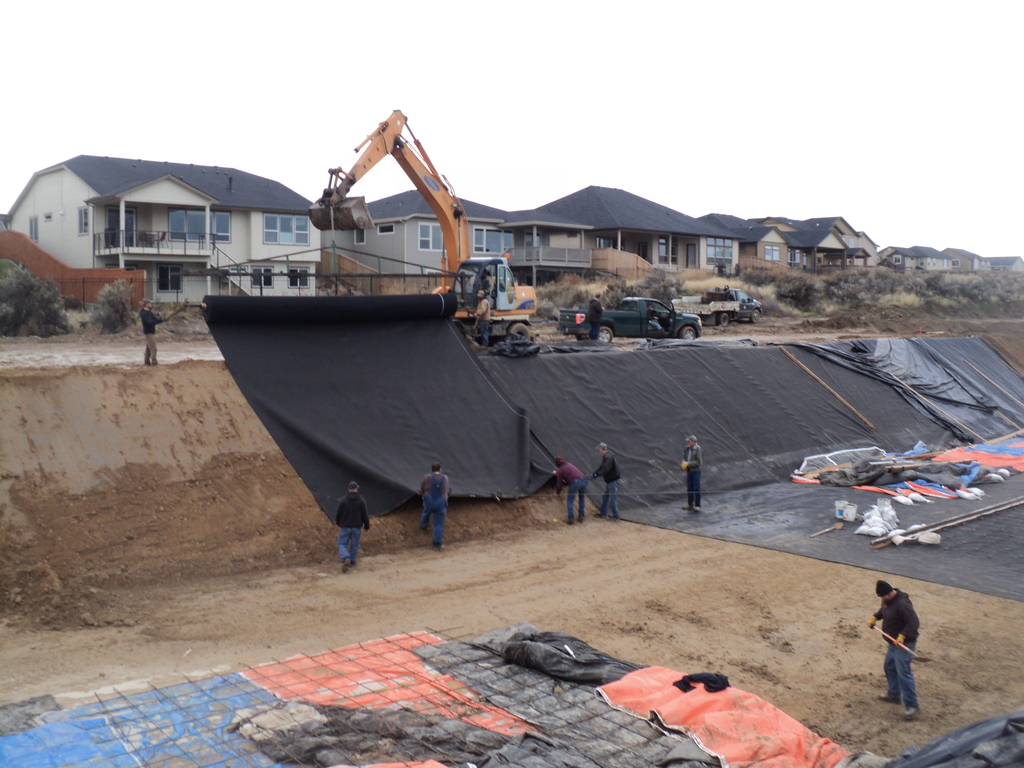
DESCRIPTION: Hydraulic barriers consisting of 3 or 4 layers of woven and non oven geotextiles and processed bentonite
FEATURES: Extremely low permeability Excellent self-healing capacity to prevent oozing of water, leachate or other liquids High flexibility and deformability Outstanding chemical resistance
APPLICATION: Barriers Containment such as: Landfill liners and caps Channel liners Artificial ponds
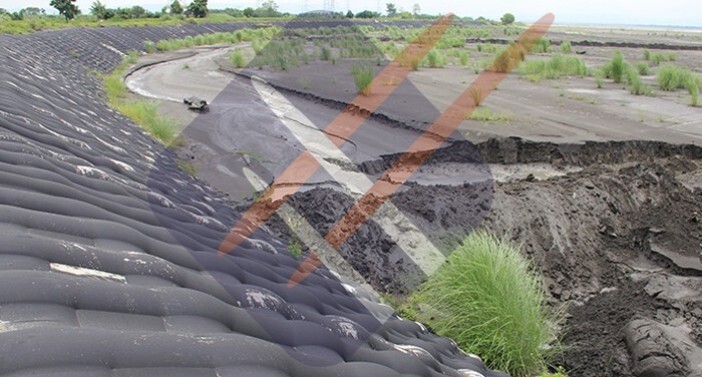
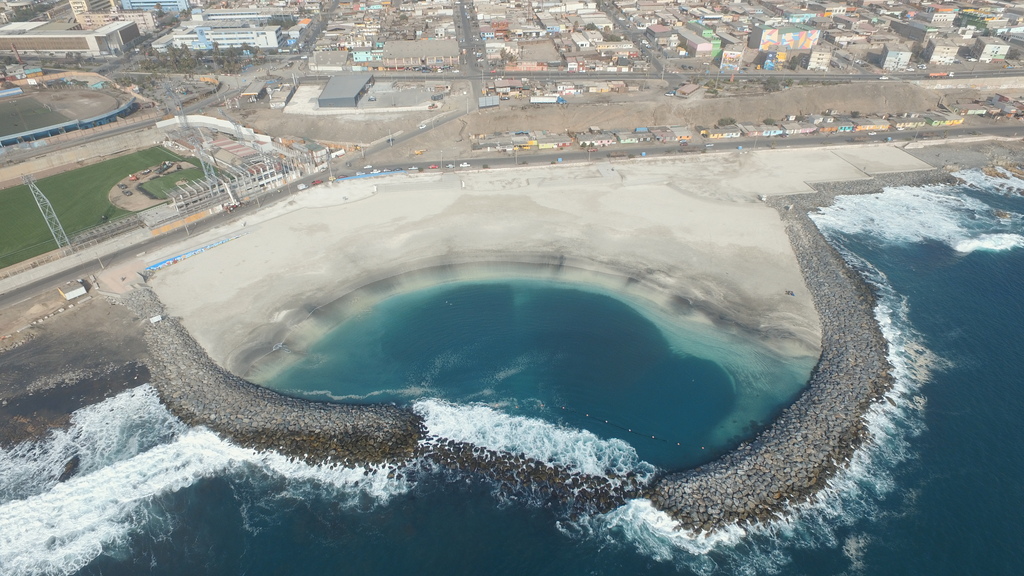
DESCRIPTION: Double layer woven geotextile fabrics grouted with cement mortar or concrete FEATURES : High tensile strength High bearing capacity Capable in steep slopes and high flow rate channels Excellent permeability for discharging excess water Resistant to hydraulic energy BENEFITS: Easy and quick installation Cost efficient Time efficient High mechanical performance against installation damage APPLICATIONS: Slope erosion control Seawalls and bulkheads Groynes and jetties Detached breakwaters Revetments Cofferdams Pier Scour Protection Pipeline armours Levees and Dikes Channel Lining Protection
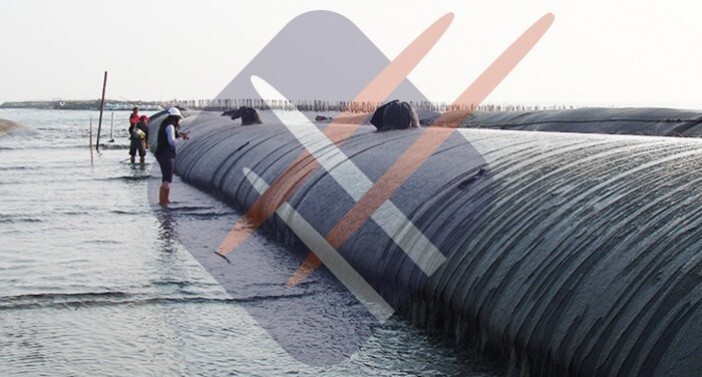
GEOTEXTILE TUBE
DESCRIPTION: Monolithic-tubular containers fabricated by multiple pieces of highly engineered synthetic woven fabrics Hydraulically filled with in-situ sand/water slurry by pump, dredger and funnel wherein water dissipates through the fabric and the remaining sand becomes the composition of the structure FEATURES: Efficient, cost-effective and eco-friendly than using traditional concrete or stones Excellent water current resistance due to flexible material Very high tensile strength, up to 300 KN/M Exceptional high permeability Optimal pore sizes, circumference exceeding 30 M High resistance to abrasion, UV, oxidation, acid, alkali, bio-decomposition and immersion corrosion in seawater APPLICATIONS: Seawalls and bulkheads Groynes and Jetties Breakwaters Detached Breakwaters Sand Dunes Submerged Breakwaters or Artificial Reefs Revetments Cofferdams Pier Scour Protector Pipeline Sleepers Levees and Dikes
DESCRIPTION: Flexible woven polyester geogrid FEATURES: High molecular weight, high modulus polyester yarns High tensile strength at low strain, up to 1000 KN/M Excellent creep resistance Outstanding Long-Term Design Strength (LTDS) Flexible and Durable: Low elongation, High tenacity Durability against UV, chemicals and installation damage Strong degradation resistance from oxidative ageing and environmental factors Versatile facing compatibility, stone or vegetation Efficient installation, easy handling APPLICATIONS: Slope stabilization Bridging over Underground voids and sinkholes Seawalls and Bulkheads Base reinforcement Road widening Bridge construction Landfill construction Flood detention
DESCRIPTION: Made from either polyester continuous filament yarns by needle-punched manufacturing process; or polypropylene staple fiber by needle-punched manufacturing process with thermally bonded surface FEATURE: High permeability High permittivity High mechanical and filtration performance Cost effective NOMINAL MASS: 80 - 120 GSM PERMEABILITY: 0.25 CMS APPLICATION: Separation Filtration Drainage
WOVEN GEOTEXTILE POLYPROPYLENE
DESCRIPTION: Composed of high tenacity polypropylene (PP) yarns in i innovative weaving structure FEATURES: High tensile strength Uniaxial: Up to 750 KN/M Biaxial: Up to 350 KN/M Outstanding permeability Outstanding resistance to abrasion, UV, oxidation, acid alkali, bio-decomposition and immersion corrosion in seawater Easy handling and installation Cost-effective APPLICATIONS: Seawalls and bulkheads Groynes and Jetties Breakwaters Detached Breakwaters Sand Dunes Submerged Breakwaters and Artificial Reefs Revetments Cofferdams Levees and Dikes Pier Scour Protection